
Sailing Injury Physiotherapy Dublin
A sailing-specific physiotherapy assessment for competitive sailors who are currently injured, managing a niggle, or struggling to return to the water. Delivered by Aisling Keller, a Chartered Physiotherapist and former elite Irish sailor who qualified Ireland for the 2020 Olympics.
Book a Sailing Injury Physiotherapy Appointment with AislingA Physiotherapist Who Actually Understands Sailing
Most physiotherapists have never hiked and torqued the ILCA through a windy and wavy race. They have never felt what it is like to trapeze through chop in 25 knots, or to grind through the final day of a multi-day keelboat regatta when your shoulders are already cooked. They understand anatomy and injury, but they do not understand what your body is actually being asked to do. That gap matters enormously when it comes to getting you back on the water.
Aisling Keller is different. She started sailing at nine years old, competed for Ireland at international level for over a decade, and qualified Ireland for the 2020 Tokyo Olympics. She has been the injured sailor who pushed through pain she did not fully understand, and wished someone had explained it better. Now, as a Chartered Physiotherapist at RAPID Physio Dublin 12, she is that person for other sailors.
What Does a Sailing Injury Physiotherapy Session Involve?
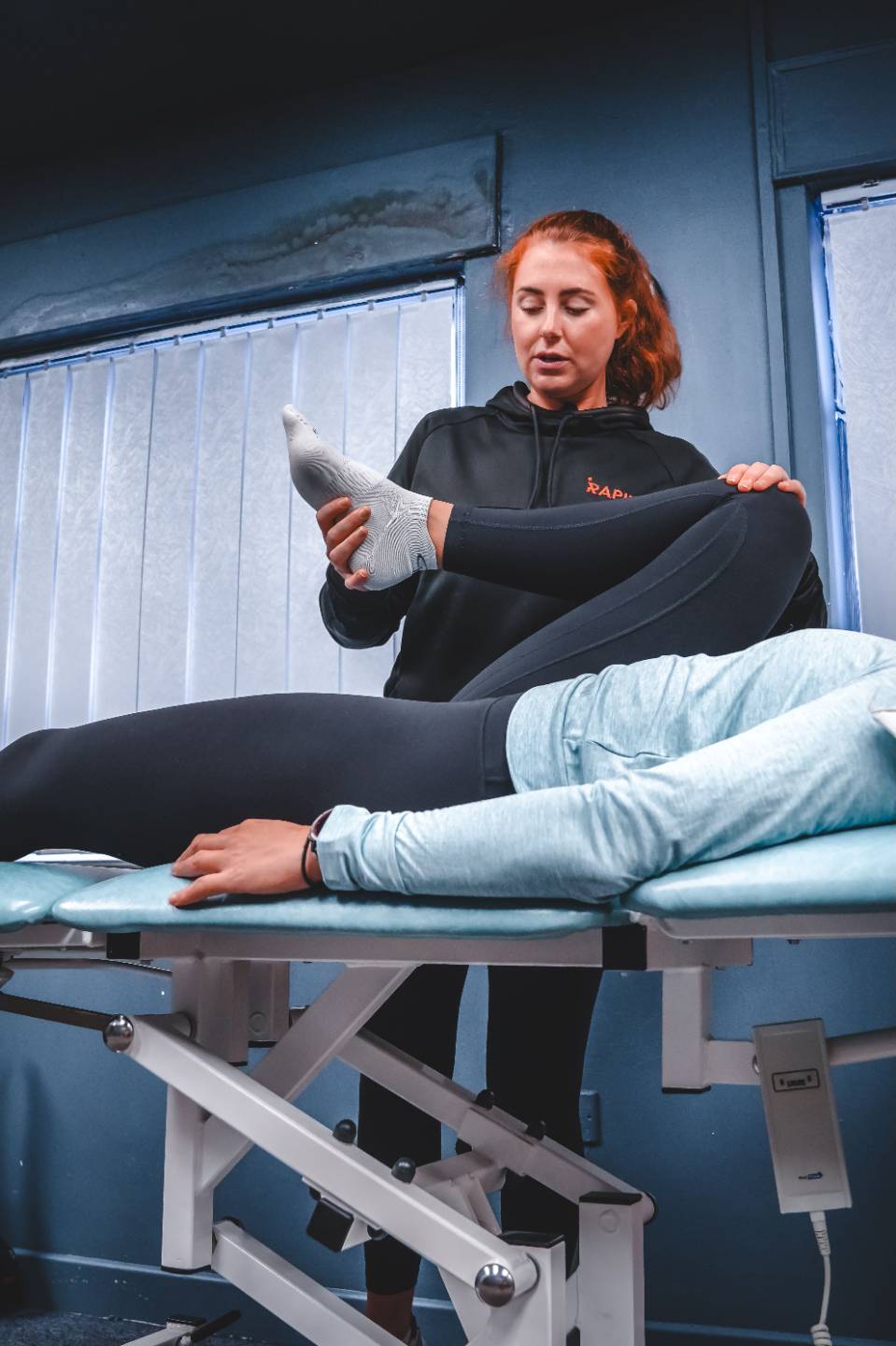
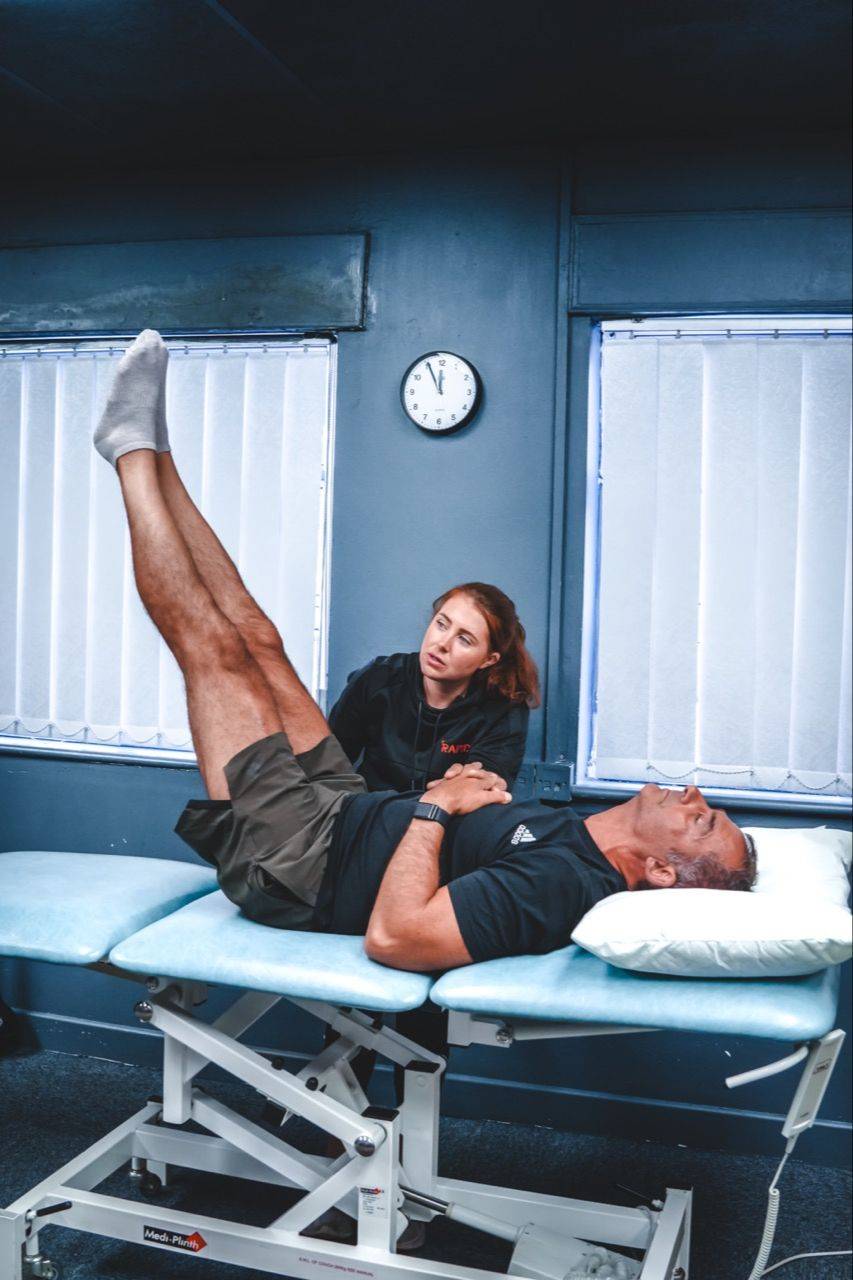
A sailing injury physiotherapy appointment at RAPID is a 45-minute sailing-specific assessment. It covers your full sailing history, a physical assessment of your injury in the context of your class and position on the water, a clear explanation of what is driving the problem, and a personalised rehabilitation plan emailed to you after the session.
Here is exactly what the session covers:
1. Your full sailing history
your class, your training load, what has been happening, what you were doing when it started, and what you want to get back to. Not a generic intake form. A proper conversation about you and your boat.
2. A sailing-specific physical assessment
Aisling assesses your injury in the context of what your body actually needs to do on the water, in your class, in your position. A dinghy sailor hiking is assessed very differently to a keelboat sailor grinding, because the demands of those boats are completely different.
3. A clear explanation of what is actually going on
in language that makes sense for a sailor, not just a patient. You leave understanding your injury properly, not just with a leaflet.
4. A personalised rehabilitation plan
emailed to you after the session, built around your sailing class and your performance goals. Not a generic exercise sheet. A plan that understands the difference between what it takes to return to a club race and what it takes to return to a championship.
Who Should Book a Sailing Injury Physiotherapy Appointment?
This service is for you if:
- You are currently injured and want a physiotherapist who actually understands what sailing demands of your body
- You have had an injury that settled, went back sailing, and then it came back, often worse than before
- You feel fit and strong in the gym, but something breaks down when you are actually on the water
- You have been told you have a slipped disc or back strain and you are not sure what that actually means for your sailing
- You are managing an overuse injury - hip, shoulder, lower back, knee - that has been building gradually across a season
- You want to come back to sailing stronger than before, not just pain-free
Common Sailing Injuries Aisling Treats
- Low back pain is the most common complaint across all classes. Hiking, trapezing or heavy sheeting in keelboats loads the lower back substantially especially if the sailor doesn’t have the capacity required.
- Shoulder pain from trimming and grinding is the most common pattern in keelboat sailors.
- Hip and groin strain from trapeze transitions,
- Knee pain from the extreme angles of the hiking position,
- Neck tightness from repeated head-up sailing are also very common.
If any of those sound familiar, you are in the right place.
Why Do Sailing Injuries Keep Coming Back?
Most sailing injuries recur not because the original injury was poorly treated, but because the rehabilitation was not built around what sailing actually demands. Pain-free is not the same as race-ready, and that gap is where most sailors get stuck.
When you are injured, your body protects the painful area by offloading onto other structures. Movement patterns change. Muscles compensate. By the time the pain settles, you have often been sailing in a modified, guarded way for weeks or months. The original injury heals, but the capacity that was lost during that time has not been rebuilt.
Then training ramps up. Or you hit a windy regatta. Or you are three days into a championship and your body is tired in a very specific way that only sailors understand. And the pain comes back. Not because something new went wrong, but because the foundation was never fully restored.
The fix is not more rest. It is understanding exactly what your body is and is not capable of, and rebuilding it around the specific demands of your class.
What Happens After the First Appointment?
Your first appointment establishes a clear picture of what is happening and why. From there, Aisling builds a rehabilitation programme around the RAPID Framework, a structured, evidence-based progression designed specifically for sailors returning from injury.
The framework takes you from your initial assessment through to returning confidently to racing, with clear stages covering early loading, building sailing-specific strength, accumulating regatta capacity, and a structured return-to-sailing plan based on objective readiness markers, not just whether the pain has stopped.
For sailors whose injury has resolved and who want to go further, the natural next step is the Sailing Performance Screen and Programme, a 90-minute class-specific assessment that tests your physical capacity against what your boat actually demands and builds a personalised strength and conditioning programme from the results.
Book a Sailing Injury Physiotherapy Appointment with Aisling